
Evidence reviewed: 7 August 2026
Author: ExtolX Editorial Team
This is an educational overview of published research, not medical advice.
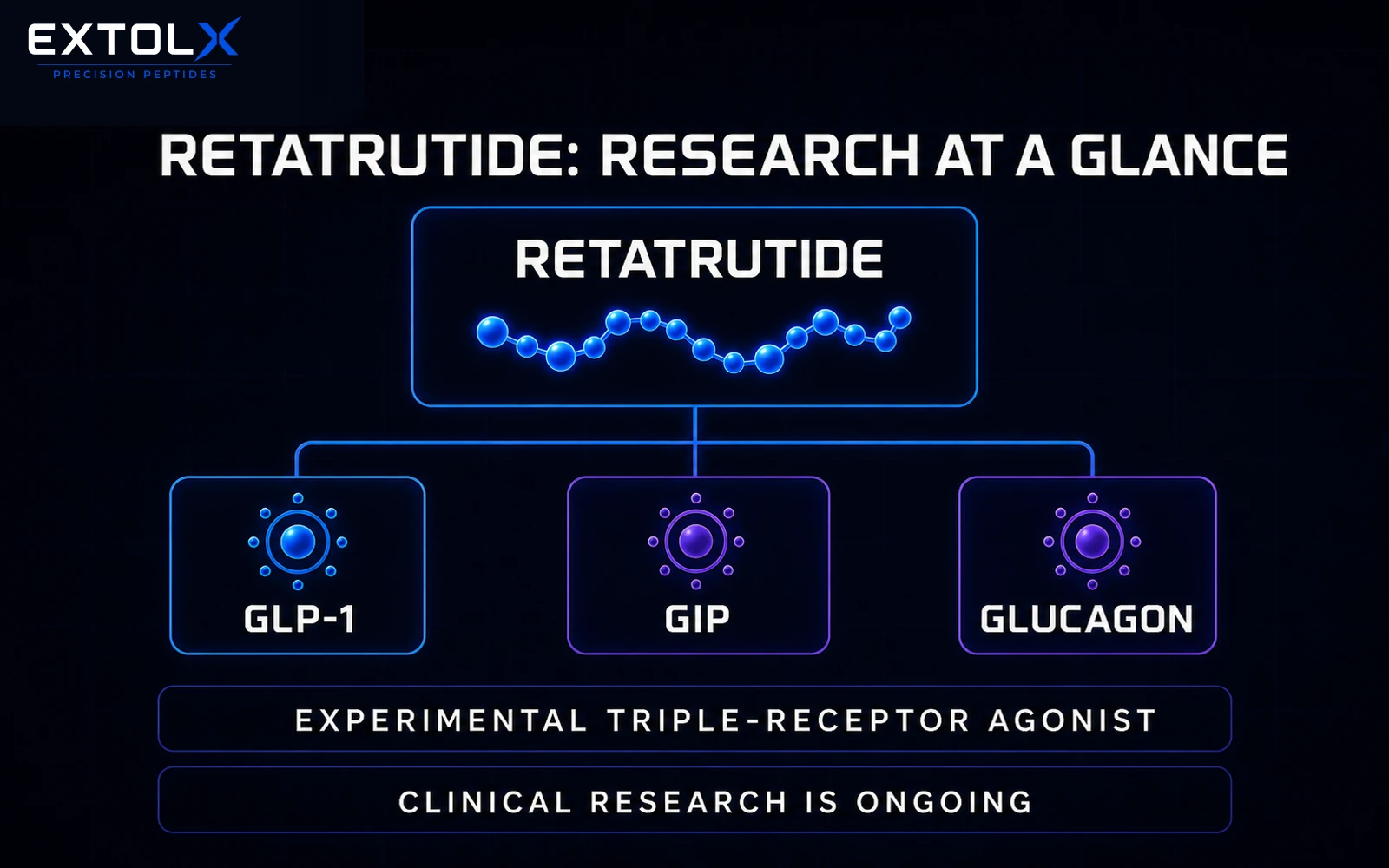
Retatrutide, also known as LY3437943, is an experimental peptide developed by Eli Lilly. It has attracted attention because one molecule is designed to activate three hormone-receptor systems connected with appetite, blood sugar and the way the body handles energy.
That three-part design is why retatrutide is often called a triple-receptor agonist. In ordinary language, it means the molecule is built to switch on three different biological message receivers.
The short version
- Retatrutide is designed to activate the GLP-1, GIP and glucagon receptors.
- These receptors influence fullness, blood-sugar control, digestion and energy use.
- Phase 2 trials produced encouraging results in obesity, type 2 diabetes and liver-fat research.
- Five Phase 3 trial results had been disclosed by July 2026, although not all detailed results had been peer reviewed.
- Retatrutide remains investigational and has not been approved by a medicines regulator.
What is retatrutide?
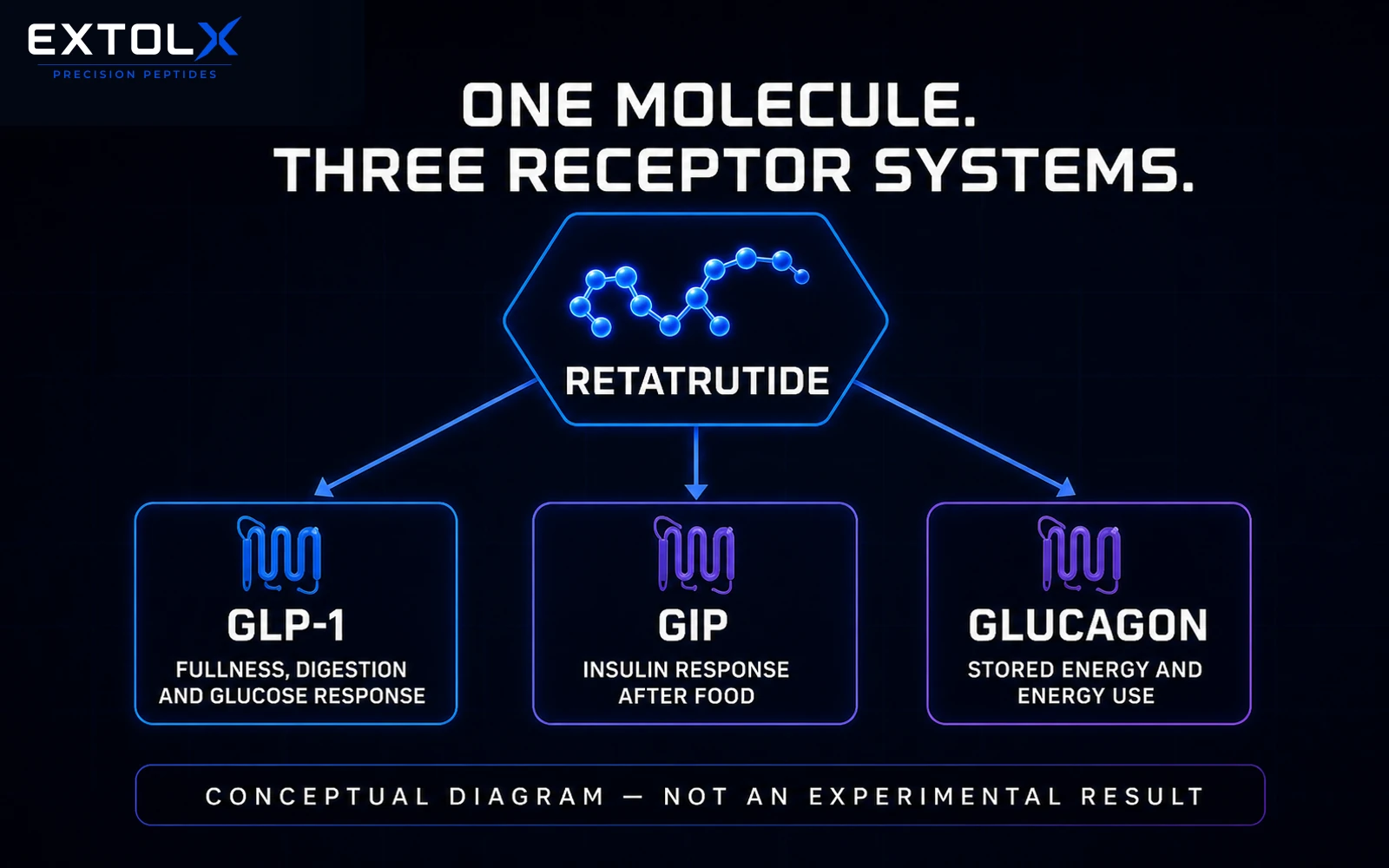
Hormones carry instructions around the body. A receptor is the part of a cell that receives one of those instructions. It works a little like a lock that responds to the right key.
Retatrutide is a single laboratory-designed molecule shaped to interact with three receptors:
GLP-1
GLP-1 is released after eating. Its signals help the body respond to food, support insulin release when blood sugar rises and contribute to feelings of fullness. It can also slow the speed at which food leaves the stomach.
GIP
GIP is another hormone released after food. It helps the pancreas respond to rising blood sugar. Researchers are interested in how GIP and GLP-1 signalling can work together.
Glucagon
Glucagon helps control how stored energy is made available. Its role is more complicated because it can raise blood sugar while also affecting fat processing and energy use. Retatrutide research explores whether carefully balancing this signal with GLP-1 and GIP can produce a useful overall metabolic effect.
The term GLP-3 is sometimes used online, but it is not a scientific hormone or an accurate name for retatrutide. “Triple-receptor agonist” is the correct description.
Why are researchers interested?
Earlier medicines in this area mainly focused on one receptor. Semaglutide, for example, acts through GLP-1. Tirzepatide acts through GLP-1 and GIP.
Retatrutide adds glucagon-receptor activity to those two signals. Researchers want to learn whether this can influence several parts of metabolism at once, including:
- Appetite and feelings of fullness
- Blood-sugar control
- Body-weight regulation
- How the body uses stored fat
- Fat held in and around the liver
- Wider measures such as blood pressure and blood fats
Its design is therefore important not only for the compound itself, but also for the future development of medicines that use several biological pathways together.
What did the earlier human trials find?
Phase 2 obesity research
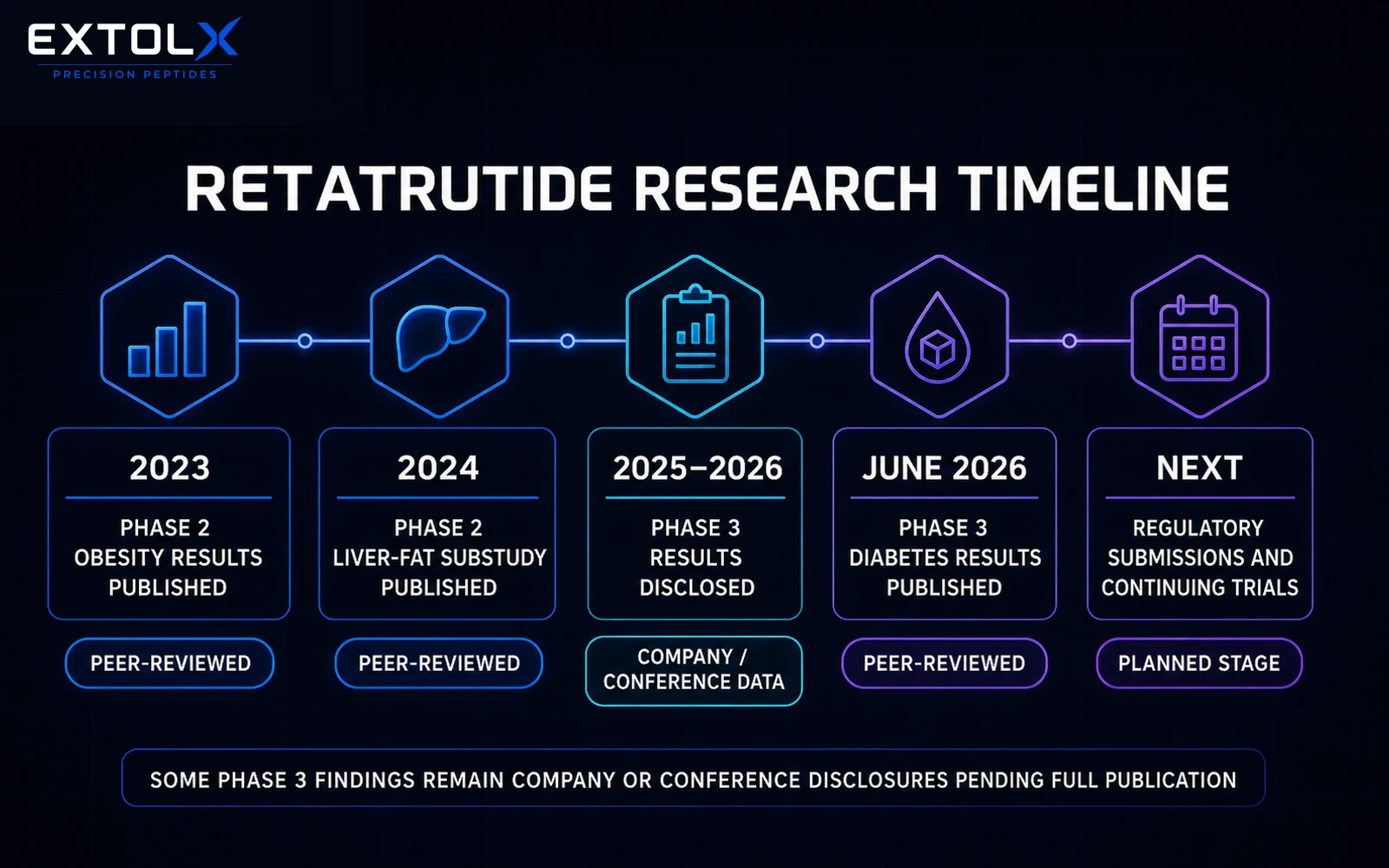
A 48-week trial involved 338 adults with obesity or overweight. Average weight changes ranged from an 8.7% reduction in the lowest-dose group to 24.2% in the highest-dose group. The placebo group averaged a 2.1% reduction.
This was an important result, but Phase 2 trials are designed to explore whether an idea works well enough to justify larger testing. They are not the final stage of medicine development.
Type 2 diabetes research
Phase 2 work in adults with type 2 diabetes found changes in both blood-sugar measurements and body weight. In 2026, the peer-reviewed TRANSCEND-T2D-1 Phase 3 trial reported greater reductions in long-term blood sugar and body weight with retatrutide than with placebo over 40 weeks.
Liver-fat research
A smaller Phase 2 substudy used scans to measure liver fat in 98 participants. Large average reductions were reported in the higher-dose groups after 24 weeks. This was an encouraging signal, but it came from a relatively small substudy and used imaging rather than a direct tissue measurement.
What has Phase 3 research added?
Phase 3 trials are larger studies intended to give regulators stronger evidence about benefits and risks.
By July 2026, Lilly had disclosed results from five Phase 3 retatrutide trials:
- TRIUMPH-1 studied adults with obesity or overweight without diabetes. Lilly reported average weight reductions of 19.0%, 25.9% and 28.3% across the three groups after 80 weeks, compared with 2.2% for placebo.
- TRANSCEND-T2D-1 studied adults with type 2 diabetes. The full results were published in The Lancet in 2026.
- TRIUMPH-2 studied obesity or overweight alongside type 2 diabetes. Lilly reported an average reduction of up to 20.8% after 80 weeks.
- TRIUMPH-3 studied people with severe obesity and established cardiovascular disease. Lilly reported an average reduction of up to 22.6% after 80 weeks.
- TRIUMPH-4 examined obesity alongside knee osteoarthritis pain and reported changes in both weight and pain scores.
The TRANSCEND-T2D-1 results have been peer reviewed. Several of the obesity findings were still company-reported topline or conference data at the date of this review. Detailed peer-reviewed publications remain important because they allow independent researchers to examine the methods and full results.
What has research shown about tolerability?
The most common unwanted effects reported in trials have involved the digestive system, including nausea, diarrhoea, constipation and vomiting. These were often seen while doses were being increased. Some studies also reported altered skin sensation, described as tingling or unusual sensitivity.
Larger and longer studies are still needed to identify less common effects and understand what happens over several years rather than several months.
What do we still need to learn?
Despite the strong headline results, several important questions remain:
- How well are changes maintained over the long term?
- What happens when treatment stops?
- How does retatrutide compare directly with established treatments?
- Which people are most likely to benefit, and which are more likely to experience unwanted effects?
- Will ongoing studies show improvements in major health outcomes rather than measurements such as weight alone?
- What will regulators conclude after reviewing the complete evidence package?
These questions are normal for a compound moving through late-stage development.
What could the future hold?
Retatrutide research now extends beyond body weight. Studies are investigating type 2 diabetes, sleep apnoea, knee osteoarthritis pain, liver disease, cardiovascular and kidney outcomes, and chronic lower-back pain.
Lilly stated in July 2026 that it planned to submit retatrutide for US regulatory review in the first quarter of 2027. A submission is not an approval, and decisions in the UK would follow their own process and timetable.
The wider scientific question is whether triple-receptor designs can provide useful effects across several connected metabolic conditions. Future results will show whether the early promise is matched by long-term benefits and an acceptable safety profile.
Plain-English glossary
- Agonist: A molecule that switches on a receptor.
- Receptor: A structure on or inside a cell that receives a biological message.
- Metabolism: The processes the body uses to turn food and stored fuel into energy.
- Placebo: An inactive comparison used to show whether changes are likely to be caused by the substance being tested.
- Phase 3 trial: A large, late-stage human study used to assess benefits and risks before a possible regulatory application.
Explore Retatrutide research material
ExtolX catalogues retatrutide research material in two separately listed amounts: Retatrutide 10mg and Retatrutide 20mg. Both pages describe the same stated peptide identity. They differ in the total amount supplied, SKU and batch documentation—not in the stated composition, purity or expected research performance.
Published clinical trials use Eli Lilly’s sponsor-manufactured investigational medicine. Independently supplied laboratory material is not the clinical-trial product and should not be treated as equivalent to it.
References and further reading
- Phase 2 obesity trial — New England Journal of Medicine
- Phase 3 type 2 diabetes trial — PubMed
- Phase 2 liver-fat trial — Nature Medicine
- TRIUMPH-1 Phase 3 results — Eli Lilly
- TRIUMPH-2 and TRIUMPH-3 topline results — Eli Lilly
- Retatrutide clinical-trial registry results — ClinicalTrials.gov
Research-use notice: ExtolX materials are supplied for laboratory research only and are not for human or veterinary use.